The Roulette Research Index: Hardware, History, Physics and Statistics
Five reference pages and one tool. Each covers one part of the game as a physical and statistical object.
Hardware · History · Physics · Statistics
All research
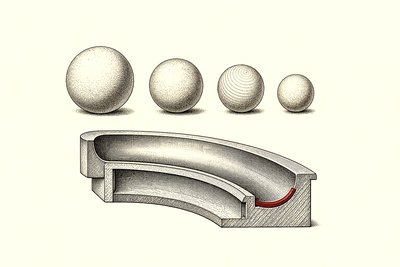
- 01Roulette ballsMaterials, sizes and weights, from ivory to acetal and PTFE, and what each changes on the wheel.
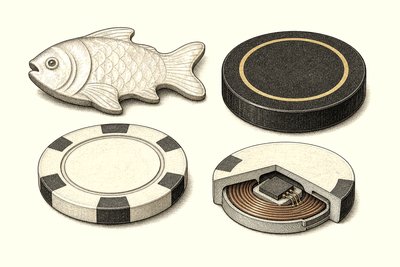
- 02Casino chipsMother-of-pearl counters, Catalin, clay composites and RFID: the history and materials of gaming chips.
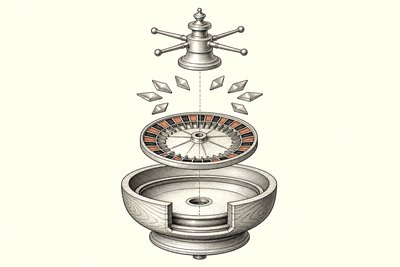
- 03Wheel anatomyEvery part of a casino wheel, the single- and double-zero number order, and embeddable charts.
- 04Wheel historyFrom the Palais-Royal and the double zero to Bad Homburg, Monte Carlo and the modern precision wheel.
- 05Prediction: fact or fictionBall and rotor physics, the wearable computers of Thorp and the Eudaemons, the 2012 study and the law.
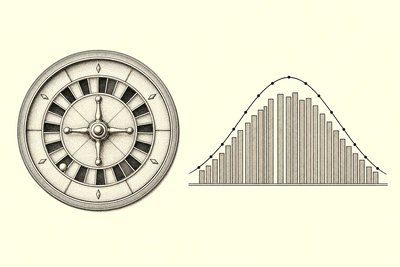
- 06The Lab: roulette simulatorSpin a fair or weighted wheel up to a million times and test any list of results for bias.
How the pages fit together
The hardware pages describe the objects: the ball, the chips and the wheel with its rotor, frets and deflectors. The history page follows the wheel from the double-zero game of eighteenth-century Paris to the single-zero standard and the precision wheels of today. The prediction page brings the two together, because every serious attempt to predict a spin is an attempt to measure the hardware. The Lab sits underneath all of them: it shows what a fair wheel produces, so that claims about patterns, hot numbers and biased wheels can be checked against numbers.
Each page lists its sources at the end. Figures that come from the site's own calculations, such as the ball masses or the spins needed to detect a bias, say how they were worked out next to the figure.